
How to Teach a Dog to Sit: 5 Steps to Train Your Dog to Sit?
 Written by
One of the first behaviors you teach a dog is to sit. The sit command is more than a fun trick; it’s a foundation for good behavior and a way to build a clear line of communication with your friend. A dog cannot jump on people if it is sitting, giving you immediate control in exciting situations. Mastering this makes future dog training sit sessions much easier.
How to Teach a Puppy to Sit
The most popular and effective way to teach a puppy to sit is through lure and reward training. This method uses a treat to guide the dog into position, making the learning process a positive game instead of a chore. You are teaching your dog to think and choose the right action.
Start your sit teaching in a quiet place, free from distractions that pull your puppy’s focus. Training should occur when the dog is relaxed and ready to learn. Use high-value treats your dog loves, like small pieces of chicken or cheese, to maintain high motivation during training.
A clicker is an excellent tool because it allows you to mark the exact moment a dog sits, creating a clear signal that the reward is coming for that specific action. This precision speeds up how fast your dog understands what you want.

Lure Your Dog into a Sit
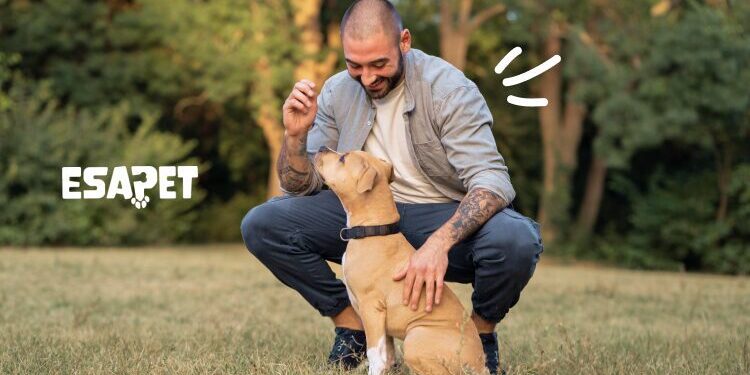
With your dog in a standing position, hold a tasty treat near its nose. Let the dog smell the food to get its full attention. Slowly move your hand and the treat from the dog’s nose up and back over its head, toward its tail. This hand motion naturally encourages the dog’s head to go up and its rear end to drop to the floor. Your dog will follow the treat into the sitting position.
Patience is key. Some dogs will try to jump or back up at first. Keep the hand movement slow and steady until the dog’s back end hits the ground.

Mark the Behavior and Reward
The instant your dog’s bottom hits the ground, you must mark the behavior. Click the clicker or say a sharp, positive word like “Yes!”.
Immediately follow the marker with enthusiastic praise and the treat. This sequence (sit, mark, reward) teaches the dog to associate the action of sitting with a positive outcome. Good timing is everything here.

Add the Verbal Cue (“Sit”)
Once your dog reliably follows the hand lure into a sit, it’s time to add the verbal cue. Say the word “Sit” clearly and once, just before you begin the hand motion. Repetition will help your dog associate the word with the action. The goal is to gradually phase out the lure until your dog responds to the sit command or a simple hand signal alone.

Fade the Lure
Now, you fade the lure. Go through the same hand motion, but without a treat in your hand. When the dog responds and sits, mark the behavior and then reward it with a treat from your other hand or pocket.
Continue to make the hand gesture smaller and less dramatic. Over time, you can shrink it to a simple finger lift or even just use the verbal cue. This step proves the dog understands the command, not just the presence of food.

Proof the Behavior (Add the 3 Ds)
Adding duration, distance, and distraction are essential in training the sit command effectively. Start asking your dog to hold the sit for a few moments before you reward it. This is how you start building duration.
Slowly increase the distance between you and your dog when you give the command. Practice in different locations with various distractions once the dog understands the command at home. This step makes the behavior reliable anywhere.
Use release cues like “Okay” or “Free” to help the dog understand when they can break from the sit position. This teaches self-control and lets them know when the work is done.
Alternative Method: Capturing the Sit
You can also capture a sit by rewarding the dog whenever it sits on its own. Keep treats handy, and when you notice your dog about to naturally sit, get ready to mark and reward the moment its rear touches the floor.
Rewarding a dog for sitting whenever it does so will encourage it to choose sitting as a default behavior. This method reinforces the action as a good thing to do, even when not explicitly asked.
Things to Avoid When Teaching Puppy to Sit
Knowing what not to do is just as important as knowing what to do. Some common mistakes can set back your progress or damage your relationship with your dog. Avoid these things at all costs.
- Avoid pushing down a dog’s hind end to prompt a sit. This physical force is intimidating and confusing for the animal, and they don’t learn from it.
- Never punish the dog for mistakes during training. If your dog struggles or gets it wrong, simply reset and try again. Punishment creates fear and anxiety.
- Be patient, as every dog learns at a different pace. There is no set timeline for success. A stubborn dog might simply need a different approach or a higher-value reward.
- Keep sessions brief. Short and frequent training sessions help improve a dog’s ability to learn commands. Aim for multiple five-minute sessions a day instead of one long one.
Why is the Sit Command for Dogs so Important?
A reliable sit becomes the foundation for calm manners in daily life, and it’s also one of the first behaviors refined in more advanced training paths. When trainers work on tasks that require stability, focus, and emotional grounding, they start with behaviors like sitting because they build impulse control.
This is the same baseline work used when handlers begin shaping complex routines — such as those needed when you train a service dog for supportive roles, preparing the animal for routines associated with psychiatric service dog training. In these cases, dogs often need to sit calmly in crowded spaces, during grounding exercises, or while performing tasks that support their handler.
Teaching a Puppy to Sit FAQs
Integrate the ‘sit’ command into daily life to reinforce it constantly. Ask the dog to sit before they receive their dinner, before you throw a ball, or before you let them go out for a walk. This teaches them that polite behavior gets them what they want.
If your dog isn’t interested in food, find what does motivate them. This could be a favorite toy, a game of tug, or lots of praise and affection. Use what your dog values as the reward to encourage the behavior.
Training sessions become playtime as a dog learns more commands, which increases their engagement. Keep the energy high and positive. As your dog begins to master the sit, you can turn it into an exercise or a fun game, strengthening your bond and making learning enjoyable.
Most trainers use an upward motion of the hand, starting at the waist and lifting toward the chest. The gesture should be consistent, so your dog learns to associate that movement with placing their dog’s nose up and lowering their body into a sit.
Sit pretty (where the dog balances on its hind legs) is an advanced trick that requires core strength and good balance. A basic sit must come first. Once your dog can sit reliably, you can introduce sit pretty using a lure and plenty of support so your dog stays stable and safe.
Try practicing in a quieter environment with fewer distractions. Make sure your hand gesture is clear, your treat is close to your dog’s nose, and your timing is consistent. Some dogs respond better when you first reward spontaneous sits — whenever your dog sits naturally, mark and treat. This teaches them that sitting pays off, making the command easier later.
Conclusion on Sit Dog Training
Teaching your dog to sit is more than checking off a basic command, it marks the beginning of real teamwork between you and your companion. Sitting helps your dog build focus, self-control, and trust, which are essential for everything from polite manners at home to more advanced skills you may teach later. It’s also a cue you’ll rely on constantly: during greetings, at mealtime, before walks, or whenever you need your dog to pause and reset.
By reinforcing sitting in different environments and adding gentle distractions, you’re shaping a dog that listens reliably in the real world. And once this foundation is in place, every future behavior — from stay and down to more specialized training — becomes easier and more intuitive. Mastering sit sets the tone for a lifetime of clear communication, mutual respect, and confident, successful training.