

Anxiety Management: Real Strategies for Treatment and Relief (2026 Guide)

 Written by
Anxiety feels like an engine that will not turn off. It’s a constant hum of worry, fear, and physical tension that disrupts your sleep, your work, and your peace of mind.
If this sounds familiar, you are not alone. Not even close.
The Anxiety & Depression Association of America (ADAA) reports that anxiety disorders are the most common mental illness in the U.S., affecting 40 million adults. That’s nearly 30% of the population experiencing an anxiety disorder at some point.
Effective anxiety management is not about just “calming down.” That advice is useless.
It’s about building a concrete toolkit of coping strategies. This guide gives you that toolkit. We will cover proven anxiety treatment options, from therapy and medication to powerful lifestyle changes and the very real support of an emotional support animal.
It’s time to take back control.
What Is an Anxiety Disorder?
Let’s be clear: an anxiety disorder is not the same as feeling stressed before a big meeting. It’s a real medical condition.
An anxiety disorder is a mental health condition defined by persistent, excessive fear, worry, or nervousness that is strong enough to interfere with your daily life. It’s when anxious feelings don’t go away and get worse over time.
These conditions affect adults, adolescents, and children, and they come in several forms:
- Generalized Anxiety Disorder (GAD): Chronic, exaggerated worry about everyday things.
- Panic Disorder: Sudden, repeated episodes of intense fear, known as panic attacks.
- Social Anxiety Disorder: An overwhelming fear of social situations.
- Phobias: Intense fear of a specific object or situation, like heights or flying.
Common Symptoms of Anxiety
Anxiety is a full-body experience. It shows up physically just as much as it does emotionally.
Recognizing these common symptoms is the first step toward getting the right help. You have to know what you’re fighting before you can win.
Physical Symptoms
Your body keeps the score. When your mind is in a state of high alert, your body reacts as if it’s facing immediate danger. This looks like:
Pounding Heart: Your heart races or pounds in your chest. It can feel so intense that you might think you’re having a heart attack, which only fuels more panic.
Sweating: You get clammy hands or find yourself sweating for no apparent reason, even when you’re not hot.
Muscle Tension: A constantly clenched jaw, tight shoulders, or a stiff neck are classic signs. You might not even notice you’re doing it.
Chest Pain or Tightness: This is one of the most frightening physical symptoms. It can be sharp or dull and adds to the fear that something is medically wrong.
Tingling Sensations: Numbness or tingling, often in your hands and feet, can happen when your breathing becomes shallow during an anxiety spike.
Emotional Symptoms
The mental side of anxiety is a relentless cycle of negative thoughts and overwhelming feelings. It can feel like your brain is working against you.
Persistent Worry: This is the hallmark. You feel a constant sense of dread or worry about things that are unlikely to happen. You can’t turn it off.
Restlessness: You feel keyed up, on edge, and unable to relax. Sitting still feels impossible.
Difficulty Concentrating: Your mind goes blank. It’s hard to focus on a task, and your thoughts feel scattered and disorganized.
Irritability: Small things set you off. You feel impatient and snappy with friends and family.
Sleep Disturbances: You have trouble falling asleep, staying asleep, or you wake up feeling exhausted. Your mind races the second your head hits the pillow.
Avoidance of Triggers: You start changing your life to avoid situations that might cause anxiety, making your world smaller and smaller.
Also read: Anxiety Diagnosis: Causes, Symptoms & Treatments
Proven Anxiety Treatment Options and Coping Strategies

Managing anxiety requires a multi-pronged attack. There is no single magic bullet.
The most effective treatment plans are personalized and usually combine several approaches. A licensed mental health professional can help you build the right plan for you.
Psychological Treatments
Talk therapy is not just talking. It’s about learning practical coping skills for anxiety.
The gold standard is Cognitive Behavioral Therapy (CBT). The core idea is simple: CBT helps you identify, challenge, and reframe the negative thoughts that fuel your anxiety. It is typically a short-term, goal-oriented treatment, often lasting 12 to 20 sessions.
A key part of CBT is Exposure Therapy. Avoidance is what keeps anxiety alive. You avoid things you fear, so you never learn that you can handle them. Exposure breaks this cycle by having you gradually face your fears in a safe environment until they lose their power.
Another approach is Acceptance and Commitment Therapy (ACT), which focuses on using mindfulness to accept your anxious feelings without judgment and commit to actions that align with your values.
Pharmacological Treatments and Anxiety Medication
Medication can be an incredibly effective tool, especially when your symptoms are severe enough to interfere with therapy or daily functioning.
The first-line anxiety medication options are antidepressants like SSRIs and SNRIs. They work by adjusting brain chemistry to regulate mood, but they are not a quick fix. According to the American Medical Association, it can take four to eight weeks to feel their full effect.
Benzodiazepines are powerful, fast-acting drugs for short-term or emergency use. However, they carry a high risk of dependence and are not a long-term solution.
For performance-based anxiety, some doctors prescribe Beta-Blockers off-label. As noted by the Cleveland Clinic, these drugs help control physical symptoms like a racing heart and trembling hands.
Never start, stop, or change your dose without a doctor’s supervision. Medication must be tapered off slowly to avoid withdrawal.
Lifestyle Changes and Relaxation Techniques
The daily habits you build are your front line of defense. These are the lifestyle changes that create resilience:
- Regular aerobic exercise is a powerful, natural anxiety-reducer. A brisk walk or run can make a huge difference.
- Prioritize sleep. Aim for seven to nine hours a night. Sleep deprivation makes anxiety a thousand times worse.
- Watch your intake of stimulants like caffeine and depressants like alcohol, as both can trigger or worsen anxiety.
- Learn simple relaxation techniques. The 4-7-8 breathing method is a great tool. Inhale through your nose for a count of four, hold your breath for seven, and exhale slowly through your mouth for eight. This simple action can interrupt your body’s stress response.
How Assistance Animals Help with Mental Disabilities and Managing Anxiety

The comfort you get from an animal is not just a feeling. It’s backed by science.
As an assistance/therapy animal, an emotional support animal (ESA) provides therapeutic support through companionship and presence. Unlike service animals, they don’t require special training to perform tasks. Their job is simply to be there for you.
The Science: Biochemical and Physical Effects
Interacting with an animal has a direct, physical impact on your body. It’s not your imagination.
Petting an animal releases oxytocin, the “bonding hormone,” which promotes a sense of well-being. At the same time, it lowers levels of cortisol, your body’s primary stress hormone. This can physically lower your blood pressure and slow your heart rate.
During a panic attack, the non-verbal, non-judgmental presence of a pet can act as a grounding point, pulling you out of your head and back into the present moment.
Even a cat’s purr has been linked to stress reduction due to its calming vibrational frequency.
The Power of Routine and Purpose
Anxiety thrives in chaos. Caring for a pet creates structure and routine, which are powerful defenses.
The daily schedule of feeding, grooming, and walking provides stability and predictability. It gives you a sense of purpose and responsibility outside of your own anxious thoughts.
Having a dog forces you to get outside for walks, giving you the dual benefit of physical exercise and a change of scenery. The simple act of caring for another living being can interrupt cycles of worry by shifting your focus outward.
Breaking Through Isolation: Social and Emotional Buffers
Anxiety can be incredibly isolating. Pets directly combat loneliness and can even help with social anxiety.
As Harvard Health Publishing points out, pets offer unconditional love and acceptance, which is a powerful antidote to the self-criticism that often accompanies anxiety. Walking a dog also acts as a natural “social catalyst,” making it easier to start conversations with others.
Their constant companionship directly reduces feelings of isolation. They are masters of mindfulness, always living in the present, which can be a valuable lesson for an anxious mind.
Understanding Your Rights: ESAs vs. Service Animals
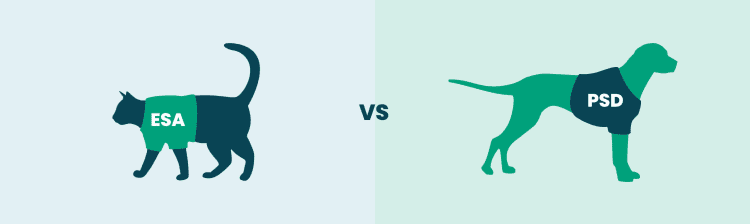
This is where a lot of people get confused, and it’s critical to know the difference. The laws are specific.
Let’s clear it up.
What is an Emotional Support Animal (ESA)?
An emotional support animal is a companion animal that provides comfort and support to a person with a mental health condition like anxiety or depression.
They are NOT trained to perform specific tasks. Because of this, ESAs are not considered service animals under the Americans with Disabilities Act (ADA).
To have a legitimate ESA, you need an ESA letter from a licensed mental health professional who has determined the animal is part of your treatment plan.
ESAs and The Fair Housing Act (FHA)
This is the most important piece of federal law protecting your right to live with your ESA.
The Fair Housing Act (FHA) requires landlords and housing authorities to provide “reasonable accommodation” for assistance animals. This means a landlord must allow your ESA, even in a building with a “no-pet” policy.
Crucially, they cannot charge you pet fees or deposits for a legitimate ESA. A landlord is permitted to request your ESA letter as documentation, but they cannot ask about the specifics of your disability.
Get your Official ESA Letter Consultation from a licensed therapist.
Get ESA Letter Now
What is a Psychiatric Service Dog (PSD)?
A Psychiatric Service Dog (PSD) is very different. A PSD is a dog that is individually trained to perform specific tasks that directly help a person with their psychiatric disability.
Examples of these tasks include:
- Performing Deep Pressure Therapy (DPT) by lying on a person to calm them during a panic attack.
- Reminding a person to take their anxiety medication at a specific time.
- Interrupting anxious behaviors like skin-picking or leg-bouncing.
Because they are task-trained, PSDs are recognized as service animals under the ADA and have the legal right to accompany their handler in public places like stores and restaurants.
Get your Official PSD Letter Consultation from a licensed therapist.
Get PSD Letter Now
FAQ about Anxiety Management
Here are some quick, direct answers to common questions.
It depends on the specific anxiety disorder. For Generalized Anxiety Disorder (GAD), the diagnostic criteria in the DSM-5 require symptoms to be present more days than not for at least six months.
Support Animals’ primary legal function is securing housing rights under the Fair Housing Act. This provides a crucial mental health accommodation by reducing the stress of finding a place to live with your support animal.
Anxiety in children can look different, often appearing as extreme separation anxiety, selective mutism (refusing to speak in certain situations), or frequent physical complaints like stomachaches. Early screening and intervention are key.
Get Your ESA Letter Today
If you believe an emotional support animal could be a vital part of your anxiety management plan, it’s time to take the next step.
An ESA provides constant, non-judgmental emotional support and can be a powerful tool for your daily coping strategies.
Get a legitimate ESA Letter or PSD Letter from ESA Pet today. Secure your housing rights, and start building the life of comfort and relief you deserve.