

Emotional Support Animal (ESA): Definition, Meaning & Rights

Kathleen Risko, MS,MSW,LCSW provides therapeutic services to adults that have faced a wide range of mental health, and health related concerns. She has a passion for helping others and is experienced in integrating evidence-based psychotherapy techniques including Cognitive Behavioral Therapy, Supportive Reflection, Solution Focus Therapy and using multiple Holistic modalities. Katie focuses on health, nutrition and wellness to help support the body and mind. Kaite also is trained in Amnio acid therapy to help with mental health symptoms. Katie is also an integrative health coach and Licensed Skin Specialist. Katie is passionate about whole-body holistic approaches such as nutrition, nervous system regulation, sleep hygiene, mindfulness approaches and Breathwork. Katie can go over supplementation, skincare, nutrition and exercise programs that fit each individual.
June 25, 2026


Kathleen Risko, MS,MSW,LCSW provides therapeutic services to adults that have faced a wide range of mental health, and health related concerns. She has a passion for helping others and is experienced in integrating evidence-based psychotherapy techniques including Cognitive Behavioral Therapy, Supportive Reflection, Solution Focus Therapy and using multiple Holistic modalities. Katie focuses on health, nutrition and wellness to help support the body and mind. Kaite also is trained in Amnio acid therapy to help with mental health symptoms. Katie is also an integrative health coach and Licensed Skin Specialist. Katie is passionate about whole-body holistic approaches such as nutrition, nervous system regulation, sleep hygiene, mindfulness approaches and Breathwork. Katie can go over supplementation, skincare, nutrition and exercise programs that fit each individual.
June 25, 2026
An emotional support animal (ESA) is a companion animal prescribed by a licensed mental health professional to provide therapeutic benefits for individuals with diagnosed emotional or mental health conditions like anxiety, depression, or PTSD.
An emotional support animal, also called an emotional support pet, provides comfort to a person with a diagnosed mental health condition. The category covers an emotional support dog, an emotional support cat, and other common companion species. People searching for an ESA animal or for emotional support animal requirements look for the same federal protections described here.
An ESA letter is a document that serves as proof of one’s need for an emotional support animal as a form of treatment for a qualifying mental health condition. A valid ESA letter grants housing protections under the Fair Housing Act (FHA), allowing individuals to live with their emotional support animal even in residences with no-pet policies, and at no additional cost. The system protecting ESA owners is real and enforceable — but it only works with proper documentation from a qualified mental health professional.
What is an Emotional Support Animal (ESA)? Definition and Meaning
ESA stands for Emotional Support Animal. The emotional support animal definition under federal law: an ESA is an animal that provides emotional, cognitive, or similar support to an individual with a qualifying mental or emotional disability — without requiring specialized task training. ESA meaning in practice: unlike a service animal, an ESA’s therapeutic value comes from companionship and presence, not from performing a specific trained task.
An ESA can be any species and is most commonly an ESA dog or cat. In housing, an ESA is legally protected under the FHA. A landlord must reasonably accommodate an ESA when a tenant provides documentation from a licensed health care provider, confirming the disability and the need for the animal. Airlines and public places, however, are generally not required to admit ESAs.
The term “emotional support pet” is sometimes used interchangeably with emotional support animal, though “emotional support animal” is the legally recognized term under federal housing law. Both refer to the same category of assistance animal.
The emotional support animal definition is codified under the Fair Housing Act (FHA), which recognizes ESAs as “assistance animals” distinct from pets. According to HUD guidance, an ESA is “an animal that provides emotional support that alleviates one or more identified symptoms or effects of a person’s disability.” The Americans with Disabilities Act (ADA) explicitly excludes ESAs from the definition of service animals — meaning an ESA does not have the public access rights that accompany a trained service animal. You can visit our dedicated article to learn more about how an emotional support animal differs from a service animal.
Get your Official ESA Letter Consultation from a licensed therapist.
Emotional Support Animal Requirements: Who Qualifies?
The emotional support animal requirements under federal law do not include training, registration, or certification. To qualify for an ESA, a person must have a disability — defined as a physical or mental impairment that substantially limits one or more major life activities — and a disability-related need for the animal. The qualifications for an emotional support animal are evaluated by a licensed mental health professional or other licensed healthcare provider.
To legally qualify for an ESA, a person must meet the following core requirements:
- Have a mental or emotional disability recognized under the Fair Housing Act or Section 504 of the Rehabilitation Act. This includes conditions that impair daily functioning such as communication, self-care, or social interaction.
- Show a disability-related need for the ESA. The animal must help alleviate specific symptoms or effects of the disability—not just provide general comfort.
What Mental Disabilities Qualify for ESAs?
Any mental or emotional disability recognized by the Diagnostic and Statistical Manual of Mental Disorders, Fifth Edition (DSM V) qualifies for an ESA.
These are some mental health conditions that qualify a person for an ESA:
- Anxiety Disorders – Including generalized anxiety disorder (GAD), panic disorder, and social anxiety. ESAs provide calming presence and reduce panic frequency.
- Major Depression – ESAs reduce isolation, improve mood, and help individuals re-engage with daily routines.
- Post-Traumatic Stress Disorder (PTSD) – An ESA can offer grounding during flashbacks or nightmares, reduce hypervigilance, and help manage emotional triggers.
- Obsessive-Compulsive Disorder (OCD) – An ESA may interrupt compulsive behavior cycles and provide emotional stability.
- Bipolar Disorder or Schizophrenia – Emotional support animals can offer consistent companionship, especially during mood swings or psychotic episodes.
For the complete breakdown, see the full list of disabilities that qualify for an emotional support animal.

Required Documentation from Licensed Professionals
To qualify for an ESA you must obtain a written recommendation (ESA letter) from a licensed healthcare provider. This documentation must:
- Be issued by a qualified practitioner (e.g., psychiatrist, psychologist, physician, social worker).
- Confirm the person’s disability and explain how the ESA alleviates symptoms.
Reflect an established provider-patient relationship, often for 30 days or more, depending on state law
Some states have enacted laws tightening ESA documentation requirements. For example:
California (AB 468) – Requires at least a 30-day patient-provider relationship and a clinical evaluation before issuing an ESA letter.
Montana, Iowa, Arkansas, Florida, and Colorado – Also mandate similar relationship timelines and restrict letters issued by out-of-state or online-only providers.
ESA Qualification in Housing
Under the Fair Housing Act, tenants qualify for reasonable accommodations from their landlords if they meet 3 criteria:
- A valid ESA letter is provided.
- The animal does not pose a direct threat or cause significant property damage.
- The tenant’s disability or the ESA’s purpose is not readily apparent, and documentation is presented upon request.
When a landlord denies an emotional support animal request, HUD procedures help you avoid discrimination.
Emotional Support Animal vs. Service Animal vs. Therapy Animal

The terms “emotional service animal,” “emotional therapy animal,” and “emotional therapy pet” are informal variations that users often search, but they do not correspond to legally defined categories. In federal law, there are three distinct types: emotional support animals (ESAs), service animals, and therapy animals. Each has different legal status, training requirements, and access rights.
Understanding the distinctions between them s is essential when navigating legal rights, responsibilities, and access—particularly when considering public access and exotic animals.
Each category differs in its definition, function, training requirements, and legal protections under federal laws like the Americans with Disabilities Act (ADA), the Fair Housing Act (FHA), and the Air Carrier Access Act (ACAA).
In summary, service animals are task-trained and federally protected in nearly all settings. ESAs receive housing protections under the FHA but not public access under the ADA. Therapy animals serve a valuable role in clinical and communal spaces but are not legally protected as assistance animals. Legal treatment of animals depends on their role, training, and context, not just the emotional bond they provide.
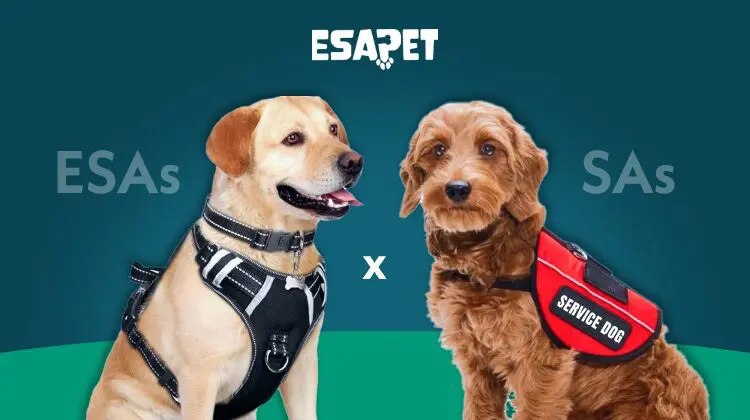
Service Animals: Task-Driven and Legally Protected in Public
Under the ADA, service animals are defined as dogs (and in some cases, miniature horses) that are individually trained to perform specific tasks related to a person’s disability. These tasks must directly mitigate the disability—examples include guiding individuals with visual impairments, alerting those who are deaf, pulling wheelchairs, or interrupting panic attacks. Emotional support alone is not recognized as a qualifying task.
Service animals are granted public access rights under Titles II and III of the ADA. Businesses and public institutions must allow them in all areas open to the public. However, exotic animals do not qualify as service animals. The ACAA also limits air travel recognition of service animals to trained dogs only, aligning with the ADA definition.

Emotional Support Animal: Housing Protections Without Public Access
An ESA is an animal that provides therapeutic emotional or psychological support to individuals with diagnosed disabilities. ESAs are not required to be trained to perform specific tasks. Their legal recognition centers on the animal’s benefit through presence and companionship.
While ESAs like ESDs have no public access rights under the ADA, there are Fair Housing Act protections that exempt an ESA from pet fees, which requires landlords to provide reasonable accommodation—even for animals not typically allowed under “no-pet” policies—if the individual can demonstrate a disability-related need.
The FHA does not restrict species, meaning exotic animals (e.g., birds, rabbits, reptiles) may be allowed as ESAs in housing, assuming no direct threat or property damage concerns. However, since 2021, the ACAA has excluded ESAs from special air travel status, allowing airlines to treat them as regular pets. Some airlines still accommodate ESAs.
Therapy Animals: Group-Oriented Comfort Providers Without Individual Rights
Therapy animals are usually obedience-trained and used in group or clinical settings to provide comfort and reduce stress for multiple individuals, such as hospital patients, students, or disaster victims. They are not recognized as service or assistance animals under federal law, as they do not assist a single individual with a disability nor receive specialized task training.
Therapy animals do not have federal public access rights, except in rare state-level exceptions (e.g., Kansas permits professional therapy dogs access to food establishments with documentation).
How Much Does an Emotional Support Animal (ESA) Cost?
An emotional support animal costs between $13,000 and $73,000 over its lifetime, depending on species, breed, and medical needs. The upfront expense is the ESA letter a licensed professional issues for housing, which ranges from $49 to $400 from licensed providers. Ongoing care for an ESA cat runs $80 to $310 per month. Care for an ESA dog runs $120 to $435 per month.
The total cost of owning an Emotional Support Animal (ESA) varies by species and location. For cats, owners spend between $80 and $310/month, or up to $4,195 annually. For ESA dogs, monthly expenses range from $120 to $435, totaling up to $4,170/year. These include food, vet care, insurance, grooming, and supplies. Upfront adoption and setup costs add another $1,150–$4,420.
Location also matters—cities like New York and San Francisco are the most expensive, while places like Lawton, OK, are far more affordable. Over a lifetime, an ESA can cost between $13,000 and $73,000, depending on species, breed, and medical needs. Despite the cost, the therapeutic benefits ESAs provide often outweigh the financial commitment for those who need them.

What Animals Can Be Emotional Support Animals?
All animals can be emotional support animals as long as they provide comfort and emotional relief. While dogs and cats are the most common and well-known ESAs, other animals are also recognized and accepted under federal law, provided they fulfill the emotional needs of their owners.
Animals that commonly qualify as an ESA include:
- Dogs and cats: the two most common emotional support animals, accepted in housing under the FHA.
- Rabbits: quiet, low-space companions suited to apartments.
- Birds: parrots and canaries provide companionship for people with allergies to fur.
- Ferrets: small, interactive animals that suit some owners despite housing-approval hurdles.
- Fish: a calming presence with minimal care demands, though without the interaction of a mammal.
- Guinea pigs and miniature horses: recognized in housing when a documented need exists.
Exotic animals such as snakes, reptiles, and rodents sometimes serve as an ESA. These species face added scrutiny in housing approval and airline accommodation on safety, allergy, and sanitation grounds.
Exotic Animals and Challenges
Exotic animals such as snakes, reptiles, and rodents sometimes serve as an ESA. These species face added scrutiny in housing approval and airline accommodation on safety, allergy, and sanitation grounds.
3 Factors to Consider When Choosing an ESA
When selecting an ESA, it’s important to consider:
- Temperament: The animal should have a calm, gentle nature to help reduce stress rather than add to it.
- Size: Consider your living space and the animal’s needs. Larger animals might not be suitable for small apartments.
- Housing Environment: Some landlords or housing providers may have policies restricting certain animals based on size, species, or breed.
Legal Restrictions and Housing Provider Limits
Housing providers may impose reasonable limits based on safety, sanitation, or animal size. For example, some landlords may not allow large or exotic animals or may require that the animal does not pose a threat to other residents.
Breed and Weight Restrictions for Emotional Support Animals
The Fair Housing Act classifies an emotional support animal as an assistance animal, not a pet. Breed bans and weight limits that a housing provider applies to pets do not extend to a documented ESA in most housing source. A reasonable-accommodation request ties the animal to a diagnosed need, not to the animal’s breed or size.
Three points define how breed restrictions interact with ESA status:
- An ESA designation rests on the tenant’s diagnosed condition and a licensed professional’s letter, not on the dog’s breed source.
- A housing provider evaluates an individual animal for a direct threat to safety on a case-by-case basis, rather than refusing an entire breed source.
- Breed-specific insurance limits on a property create a documented exception in some cases, which a tenant resolves through the accommodation process source.
Do breed restrictions apply to emotional support animals?
Standard pet breed restrictions do not apply to a documented emotional support animal in a covered housing source. The Fair Housing Act requires a reasonable accommodation that overrides a blanket breed ban, subject to an individualized direct-threat assessment. Usually, it’s recommended that you select emotional support dog breeds suited to apartment living.
Can a pit bull be an emotional support animal?
A pit bull qualifies as an emotional support animal. ESA eligibility depends on the owner’s diagnosed need and a valid ESA letter, and the Fair Housing Act treats a breed-restricted dog the same as any other assistance animal in housing source.
Are emotional support animals exempt from breed restrictions?
A documented ESA receives an exemption from pet breed and weight policies as a reasonable accommodation source. The exemption holds unless the specific animal poses a documented direct threat that no accommodation resolves.
Benefits of Emotional Support Animals (ESAs)
There are 6 main ESA benefits—validated by peer-reviewed studies—that highlight the therapeutic value of ESAs as part of comprehensive behavioral health care:
- Reduced Stress and Cortisol Levels: ESAs lower physiological stress by reducing cortisol levels and promoting relaxation responses.
- Alleviation of Depression: ESAs improve mood and emotional well-being by providing emotional grounding and consistent companionship.
- Decreased Loneliness and Social Isolation: ESAs encourage social engagement and reduce feelings of loneliness by acting as empathetic companions.
- Strengthened Emotional Attachment: ESAs form secure attachment bonds that support emotional regulation and trauma recovery.
- Improved Daily Functioning: ESAs contribute to behavioral consistency and emotional resilience by offering routine and comfort in daily life.
- Support for Children with ADHD: Interaction with dogs helps children with ADHD improve attention, mood regulation, and reduce disruptive behaviors.
1. Emotional Regulation and Cortisol Reduction
ESAs help mitigate stress responses by lowering cortisol levels—the body’s primary stress hormone—during periods of psychological strain source.
2. Alleviation of Depression and Emotional Distress
Emotional support animals can act as attachment figures, helping reduce symptoms of depression, trauma, and loneliness by offering emotional grounding and consistency source.
3. Decreased Loneliness and Social Withdrawal
ESAs increase social engagement and reduce withdrawal symptoms by providing companionship that encourages users to interact more confidently with their environment source.
4. Strengthened Attachment and Emotional Security
The consistent, nonjudgmental presence of an ESA builds attachment-based security, helping users regulate emotional highs and lows, particularly among trauma survivors source.
5. Mental Health Support for ADHD and Children
Dogs support emotional regulation, improved focus, and reduced disruptive behavior in children with ADHD—suggesting potential applications of ESAs for similar populations source.
6. Emotional Support During Daily Functioning
Through predictability and emotional presence, ESAs help users develop routine and behavioral consistency, improving daily functioning and emotional resilience source.
Emotional Support Animals provide quantifiable emotional, physiological, and psychological benefits. From reducing cortisol and anxiety to improving social connection and attachment regulation, ESAs serve as evidence-backed interventions that enhance the well-being of individuals with emotional or psychiatric disabilities.
Get your Official ESA Letter Consultation from a licensed therapist.
ESA Certification and Registration
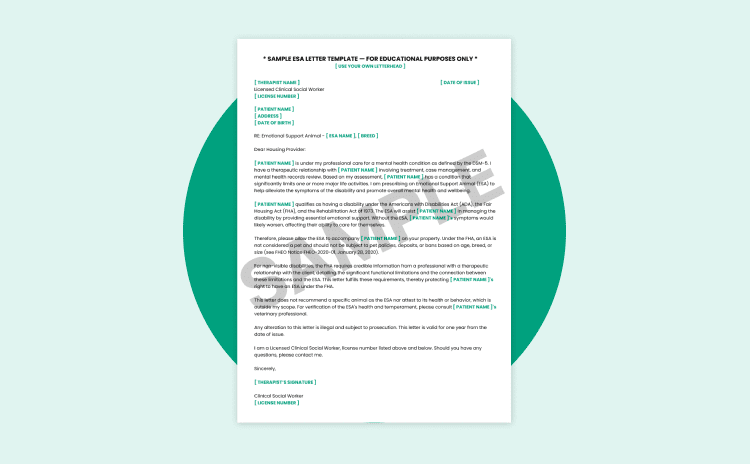
There is no official ESA certification or ESA registration. No federal or state agency maintains a registry of emotional support animals, and no certificate, vest, ID card, or badge is legally required to establish ESA status. Websites that sell “ESA certification” or “ESA registration” documents are selling products that have no legal standing under the Fair Housing Act or any other federal law.
What does have legal standing is an ESA letter from a licensed mental health professional or other licensed healthcare provider. An ESA letter documents the person’s disability and the disability-related need for the animal. This letter — not a certificate or registration — is what housing providers are permitted to request under FHA guidelines.
If you encounter a website offering to “certify” or “register” your ESA for a fee, the document produced is not recognized by HUD, landlords operating under FHA guidance, or any court as a substitute for a proper ESA letter from a licensed professional.
Emotional Support Animal Laws
Emotional Support Animal (ESA) laws vary across contexts—housing, travel, and public access—primarily governed by federal statutes like the ADA, FHA, and recent DOT regulations. We recommend that you check your state’s regulations, as emotional support animal laws vary by state.
ESAs are not service animals under the ADA, so public businesses are not legally required to admit them. However, under the Fair Housing Act (FHA), housing providers must make reasonable accommodations, allowing ESAs in “no-pet” housing if there’s a documented disability-related need. This protection can apply to any species, not just dogs or cats.
As of January 10, 2021, the Department of Transportation (DOT) revised its rules under the Air Carrier Access Act (ACAA), allowing airlines to treat ESAs as pets. Airlines are no longer required to accept ESAs and may charge fees or apply pet restrictions.
To qualify for housing accommodations, individuals must present reliable documentation from a licensed health professional. ESA letters must reflect a clinical evaluation and cannot rely solely on online certifications. Requests may be legally denied if the animal poses a direct threat to others or causes unmitigable property damage, based on actual behavior—not breed or size assumptions.
Who Can Write an ESA Letter?
ESA letters must be written by licensed health professionals who can assess an individual’s emotional or psychological needs. Qualified professionals include psychologists, psychiatrists, licensed clinical social workers (LCSWs), licensed professional counselors (LPCs), physicians, nurse practitioners, and physician’s assistants.
Federal law does not require a specific format for ESA letters, but documentation must demonstrate a disability-related need for the animal’s support. The letter should indicate that the provider has personal knowledge of the individual’s condition. Many states impose additional safeguards: for instance, California and Iowa require a 30-day pre-existing therapeutic relationship and a clinical evaluation before issuing ESA documentation.
These state-level requirements are designed to curb misuse and ensure that ESA letters are medically justified. Online services may help initiate the process, but letters must come from professionals licensed in the state where the individual resides, and casual online certifications are often considered insufficient.
How to Get an ESA Letter
To legally obtain an ESA letter:
- Schedule a consultation with a licensed mental health provider.
- Discuss your emotional or psychological symptoms and how an animal may alleviate them.
- If qualified, receive a signed ESA letter that includes the provider’s license details, confirmation of disability-related need, and specifics of how the animal provides support.
States like California enforce additional standards, such as requiring the professional to treat the individual for at least 30 days before issuing the letter. Some services, such as ESA Pet, assist with telehealth consultations to connect individuals with licensed professionals for this process.
Get your Official ESA Letter Consultation from a licensed therapist.
Get ESA Letter NowFrequently Asked Questions about ESA
No federal law caps the number of emotional support animals one person may have. The Fair Housing Act allows more than one ESA when a licensed mental health professional documents a disability-related need for each animal. A person with two ESAs needs documentation supporting both.
Housing providers evaluate multiple-ESA requests the same way they evaluate a single one. Each animal is subject to the direct-threat and property-damage limits. A landlord weighs whether the total number creates an undue burden, such as several large animals in a small unit, and grants the accommodation when the documented need is clear.
You turn an existing pet into an emotional support animal through one step: obtain an ESA letter from a licensed mental health professional. No training, registration, or special equipment converts a pet into an ESA. The letter documents your disability-related need, and your current pet then holds ESA status under the Fair Housing Act.
Anxiety qualifies for an emotional support animal when a licensed professional diagnoses an anxiety disorder and confirms the animal eases its symptoms. Generalized anxiety disorder, panic disorder, and social anxiety all meet the standard. The professional documents how the ESA reduces panic frequency or provides a calming presence.
Deciding on When to Get an Emotional Support Animal
Getting an emotional support animal can be a life-changing step for those dealing with emotional or psychological challenges. Understanding the proper process — starting with a thorough evaluation by a licensed mental health professional and obtaining a valid ESA letter — is essential to ensure your rights and protections.
Remember, ESAs differ from service and therapy animals, and while many types of animals can provide emotional support, choosing the right companion and following legal guidelines will make the process smoother. Avoid unofficial certifications and always rely on licensed professionals to secure your ESA documentation.
With the right support and knowledge, you can confidently enjoy the benefits that an emotional support animal brings to your well-being and daily life.
Update Notes
Feb. 18, 2026: This article was medically reviewed by Kathleen Risko
Sources
Griffin, J. A., Hurley, K., & McCune, S. (2022). Emotional support animal partnerships: Behavior, welfare, and clinical involvement. In A. H. Fine (Ed.), Handbook on Animal-Assisted Therapy (5th ed., pp. 179–197). Academic Press.
Pendry, P., & Vandagriff, J. L. (2019). Animal visitation program reduces cortisol levels of university students: A randomized controlled trial. AERA Open, 5(3), 2332858419852592
Schuck, S. E. B., Emmerson, N. A., Fine, A. H., & Lakes, K. D. (2015). Canine-assisted therapy for children with ADHD: Preliminary findings from the Positive Assertive Cooperative Kids study. Journal of Attention Disorders, 19(2), 125–137.
Younggren, J. N., Boisvert, J. A., Boness, C. L., Bryan, M. A., & Douglass, A. B. (2023). Exploring benefits of emotional support animals: ESAs as attachment figures. Professional Psychology: Research and Practice.

Psychiatric Service Dog, ESA and Service Animal Rights, Service Animals
Service Dog Registration Lookup: How to ...

Jonalyn Dionio
Jul 6 2026

ESA and Service Animal Rights, Emotional Support Animal
ESA Forms & Letters: Everything You...
Jonalyn Dionio
Jan 22 2026