
How to Fly With Emotional Support Animals?
 Written by
Following the U.S. Department of Transportation’s 2021 regulatory change, emotional support animals (ESAs) are no longer classified as service animals under the Air Carrier Access Act.
As a result, most U.S. airlines now treat ESAs as regular pets, meaning pet fees, carrier requirements, and travel restrictions apply.
ESA owners must provide documentation such as veterinary health certificates and vaccination records, and use airline-approved carriers that typically must fit under the seat.
Most airlines impose combined pet and carrier weight limits, generally 20–25 lbs. To fly, travelers must book in advance, pay fees ranging from $75 to $200, and comply with individual airline rules.
Some international carriers—like LATAM Airlines, Volaris, and Aeromexico—still accept ESAs on select routes with proper documentation. Importantly, travelers can consider having their ESA trained as a Psychiatric Service Dog (PSD), which may restore ADA service animal rights, including fee waivers and in-cabin access.
Emotional support animals are recognized by a legitimate ESA letter written by a licensed mental health professional.
How to Fly With Emotional Support Animals?
Flying with your emotional support animal (ESA) is possible, but recent airline regulations have changed how ESAs are treated during air travel. Here’s a step-by-step guide to help you prepare for your trip:
- Check Airline Policies: Since most U.S. airlines no longer recognize ESAs as service animals, your ESA will likely be treated as a pet. Review your airline’s pet travel policy carefully, as requirements can vary.
- Pay Pet Fees: Be prepared to pay pet transport fees, which typically range from $75 to $200 per flight.
- Use an Approved Carrier: Your ESA must fit in an airline-approved carrier that goes under the seat in front of you. If your ESA is too large, the airline may require transport in the cargo hold.
- Provide Necessary Documentation: Airlines may ask for:
- A health certificate from your veterinarian.
- Proof of vaccinations.
- Advance notice of pet travel.
- Understand International Airline Rules: Some international airlines, like LATAM Airlines or Copa Airlines, may still allow ESAs without classifying them as pets, depending on the route. Always confirm directly with the airline.
- Consider Psychiatric Service Dog (PSD) Status: If your ESA is a trained Psychiatric Service Dog, it may qualify as a service animal, allowing it to fly without pet fees or carrier restrictions.
- Plan Ahead: Contact the airline before booking to confirm current policies and avoid surprises on travel day.
By following these steps, you can ensure a smoother and less stressful experience when flying with your emotional support animal.
Get your Official ESA Letter Consultation from a licensed therapist.
Get ESA Letter NowWhich Airlines Still Allow Emotional Support Animals?

All U.S. airlines no longer recognize emotional support animals (ESAs) as service animals, following the U.S. Department of Transportation’s 2021 amendment to the Air Carrier Access Act (ACAA). However, a few foreign carriers operating in the U.S. and select domestic policies still make limited accommodations.
U.S. Airlines and ESA Acceptance
| Airline | Accepts ESAs? | Recognized Animals |
|---|---|---|
| Alaska Airlines | No | Only trained service dogs were allowed. |
| American Airlines | No | ESAs treated as pets. Must fit in a carrier under the seat. |
| Delta Air Lines | No | Follow DOT guidelines: ESAs not accepted. |
| Southwest Airlines | No | Only task-trained service dogs permitted. |
| United Airlines | No | Only accepts trained service dogs. |
| JetBlue | No | Emotional support animals not accepted; only pets and trained service dogs allowed. |
| Frontier Airlines | No | Allows pets in the cabin, but not ESAs under service animal provisions. |
| Spirit Airlines | No | Only trained service animals were allowed. |
International Airlines That Still Accept ESAs
| Airline | Accepts ESAs? | Route Limitations | Requirements |
|---|---|---|---|
| LATAM Airlines | Yes | Flights to/from U.S. and within South America | Accepts dogs and cats as ESAs with documentation. Restrictions apply by destination. |
| Volaris | Yes | Mexico to the U.S. | Accepts emotional support dogs with a completed medical form (issued within 12 months). |
| Aeromexico | Yes | Mexico-U.S. routes | ESA dogs accepted with documentation and advance notice. |
These airlines continue to accommodate emotional support animals, usually dogs and cats, but often only on routes originating from or terminating in Latin America.
Do you qualify for a PSD Letter? Find out here
Can Emotional Support Dogs Fly?

Yes, emotional support dogs can fly, but not as service animals. Since DOT’s 2021 rule change, airlines treat ESAs—including dogs—as pets unless the dog is trained as a Psychiatric Service Animal (PSD).
To fly with an emotional support dog:
- Pay applicable pet fees.
- Comply with size and weight restrictions.
- Keep your dog in an approved carrier, unless the airline allows small dogs to stay on your lap.
If your dog is task-trained as a PSD, it qualifies as a service animal and can fly without pet fees or carrier restrictions.
After flying the ESD, you should familiarize yourself with the places emotional support dogs are allowed, which may be different state to state.
Get your Official PSD Letter Consultation from a licensed therapist.
Get PSD Letter Now
Do Emotional Support Animals Fly Free?
No, emotional support animals do not fly free. Since 2021, airlines are allowed to treat ESAs as pets and charge pet transport fees.
Airlines typically charge between $75 and $200 per flight, depending on the carrier. This fee covers transport either in-cabin (if size permits) or in the cargo hold for larger animals.
Only Psychiatric Service Dogs (PSDs), which are individually trained to perform tasks, are recognized as service animals and fly without fees under U.S. law.
Considerations When Flying With an ESA Pet

There are 3 main airline pet policies you should consider before you fly:
- Carrier Size & Pet Weight: Airlines usually have set limits on the size and weight of pets that can travel in-cabin.
- Fees & Booking: Airlines will charge pets that are not service animals a set fee.
- Restrictions: Airlines may have breed specific restrictions or pet restrictions when flying to destinations that aren’t pet friendly.
Carrier Size & Pet Weight
Most airlines limit the combined weight of a pet and carrier to 20–25 lbs, although Spirit Airlines is an exception, allowing up to 40 lbs total. Carriers must fit beneath the seat in front and conform to strict dimensional rules (varies by airline).
Fees & Booking
Pet fees range from $50 (Allegiant) to $125 (most legacy carriers like United, AA, JetBlue) per direction. United adds an additional $125 fee for layovers over 4 hours (domestic) or 24 hours (international).
Restrictions
All airlines allow dogs and cats, but acceptance of rabbits, birds, guinea pigs varies. American and JetBlue restrict to cats and dogs only. Big breeds and strong-bite breeds like pitbulls are restricted by most airlines.
Pets must also typically be at least 8 weeks old for domestic travel and 16 weeks for international flights on most carriers.
Get your Official ESA Letter Consultation from a licensed therapist.
Get ESA Letter NowComparison of Airline Pet Fees and Requirements
| Airline | Pet Fee (One Way) | Weight Limit | Carrier Requirements | Allowed Animals |
|---|---|---|---|---|
| Alaska Airlines | $100 | Carrier + pet: ≤20 lbs | Soft- or hard-sided carrier (max 17″x11″x7.5″) | Accepts dogs, cats, rabbits, household birds |
| Allegiant Air | $50 | No published weight limit | Carrier must fit under seat (9″x16″x19″) | Only domestic flights; only cats & dogs permitted |
| American Airlines | $125 | Pet must fit in carrier | Max 18″x11″x11″ (soft-sided preferred) | Allows dogs, cats (≥8 weeks); no travel to/from Hawaii or select intl. |
| Delta Air Lines | $95 | Carrier + pet: ≤20 lbs | 18″x11″x11″ soft-sided preferred | Accepts cats, dogs, birds (age ≥10 weeks) |
| Frontier Airlines | $99 | No published weight limit | Carrier must fit under seat | Accepts dogs, cats, rabbits, guinea pigs, hamsters, birds |
| Hawaiian Airlines | $125 (in-state); $35 inter-island | Carrier + pet: ≤25 lbs | 16″x10″x9.5″ (hard/soft-sided) | Only cats, dogs on interisland/intra-HI flights |
| JetBlue | $125 | Carrier + pet: ≤20 lbs | Carrier max 17″x12.5″x8.5″ | Accepts dogs, cats; JetPaws program offers pet perks |
| Southwest Airlines | $95 | Carrier + pet: ≤20 lbs | 18.5″x13.5″x9.5″ carrier | Accepts small cats, dogs only; travel only within U.S. |
| Spirit Airlines | $110 | Pet + carrier: ≤40 lbs | 18″x14″x9″ carrier required | Only cats, dogs, birds, rabbits; U.S. domestic + Puerto Rico flights |
| United Airlines | $125 + $125 for layover >4 hrs | Pet must fit in carrier | 17.5″x12″x7.5″ (hard) or 18″x11″x11″ (soft) | Accepts dogs, cats (≥2 months domestic/≥4 months international) |
Do you qualify for ESA? Find out now
Frequently Asked Questions
Can You Fly With a Snub-Nosed Dog?
Yes, but most major U.S. airlines restrict or prohibit these dog breeds from flying in cargo due to safety concerns. For example, United Airlines, American Airlines, and Delta all ban snub-nosed dogs in the cargo hold.
Can you take an emotional support animal on a plane in 2025?
Yes, you can take an emotional support animal on a plane in 2025, but only under the airline’s pet policy. Since ESAs are not recognized as service animals, airlines treat them as pets, applying pet fees and travel restrictions.
To travel with your ESA in 2025:
- Contact the airline in advance.
- Prepare to pay pet fees.
- Ensure your ESA meets all size and carrier regulations.
Each airline has full discretion to accept or deny your ESA, based on its standard pet travel policy.
Can you take an ESA on an international flight?
Yes, you can take an ESA on an international flight, but only if both the airline and destination country permit it.
Under U.S. regulations:
- Airlines can classify ESAs as pets for international flights.
- Pet fees, health certificates, and carrier restrictions apply.
Destination country laws also impact your ability to bring an ESA:
- Some countries may require quarantines or prohibit animal entry.
- Documentation, vaccines, and customs clearance may be necessary.
Are emotional support animals allowed on planes?
Yes, emotional support animals are allowed on planes, but as pets, not as service animals. Airlines no longer need to treat ESAs as assistance animals, so:
- Your ESA will travel under standard pet policies.
- You must meet airline pet requirements, including approved carrier dimensions and pet fees.
Some airlines may allow ESAs in-cabin, depending on their individual policy, while others might require transport in the cargo hold if size or behavior is an issue.
Get your Official ESA Letter Consultation from a licensed therapist.
Get ESA Letter NowWe Simplify ESA and PSD Letters for Stress-Free Flights
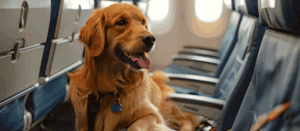
While emotional support animals can still accompany you on flights, it’s essential to understand that airlines now treat them as pets, not service animals. This means paying pet fees, complying with carrier size limits, and providing documentation.
Before you book your flight:
- Contact the airline directly.
- Confirm their ESA policy.
- Prepare your ESA for a safe and comfortable journey.
At ESA Pet, we’re here to help you navigate the changing regulations and ensure your emotional support animal travels with you smoothly.
Need guidance? Explore our resources on How to Get an ESA Letter to prepare for your next trip.